11 / TECHNICAL INTELLIGENCE & BUYER EDUCATION
Bulk Ingredient Technical Knowledge Hub:
Analytical Guides & Buyer FAQ
Explore technical resources for evaluating high-purity bioactive ingredients, standardized botanical extracts and formulation-specific raw materials. The EXBIOL knowledge hub connects molecular identity, analytical methods, formulation engineering, quality documentation and wholesale procurement to support informed supplier selection.
EXBIOL / KNOWLEDGE ARCHITECTURE
R&D / QA / PROCUREMENT
Connect Scientific Evidence to Industrial Sourcing Decisions
Technical purchasing should begin with a clear ingredient specification, followed by analytical qualification, formulation testing and review of commercial supply conditions. Each decision requires different supporting evidence.
01 / UNDERSTAND
Ingredient Identity & Function
02 / VERIFY
Assay, Impurities & Batch Data
03 / FORMULATE
Delivery & Processing Suitability
04 / SOURCE
MOQ, Documents & Logistics
KNOWLEDGE PATHWAYS / TOPICAL CLUSTERS
Four Technical Knowledge Platforms
Choose a technical pathway according to your current qualification question. Each platform links to EXBIOL resources covering ingredient analysis, formulation engineering, quality systems or supplier procurement.
Analytical Technical Dossiers
Review molecular identity, quantitative assays, HPLC fingerprints, LC-MS exact mass, and ¹H NMR characterization.
R&D SEARCH INTENT
HPLC Assay · Mass ID · Chromatogram · Batch Release COA
Formulation Application Guides
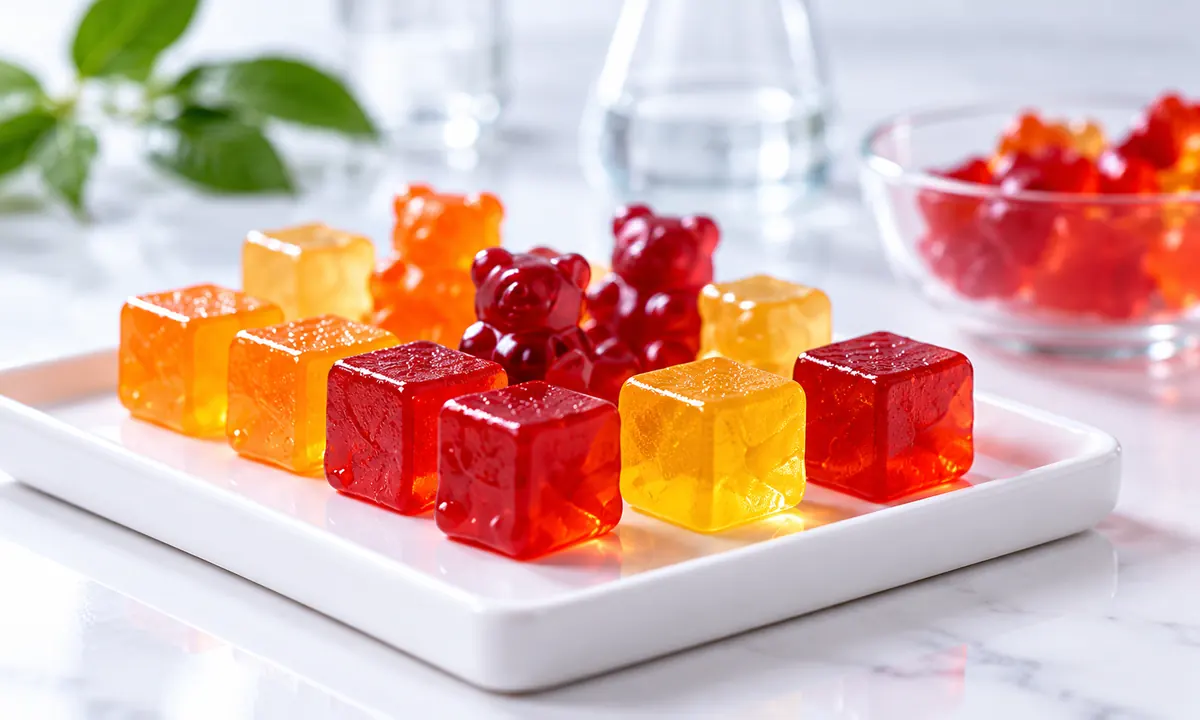
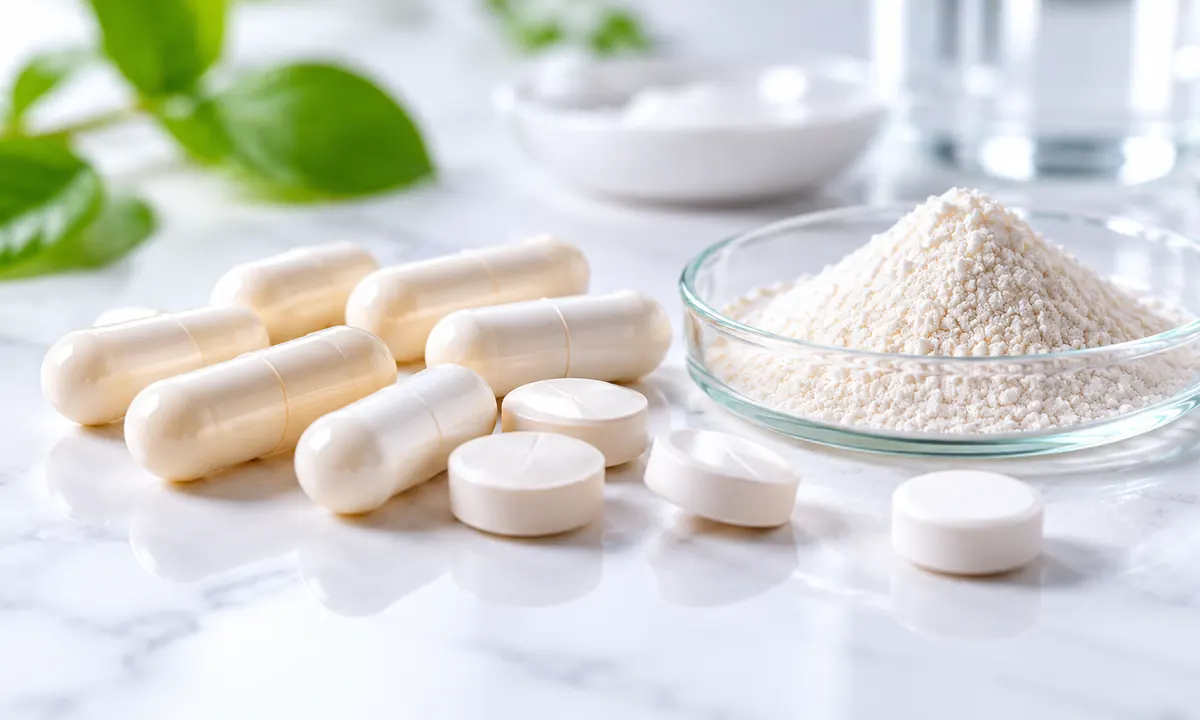
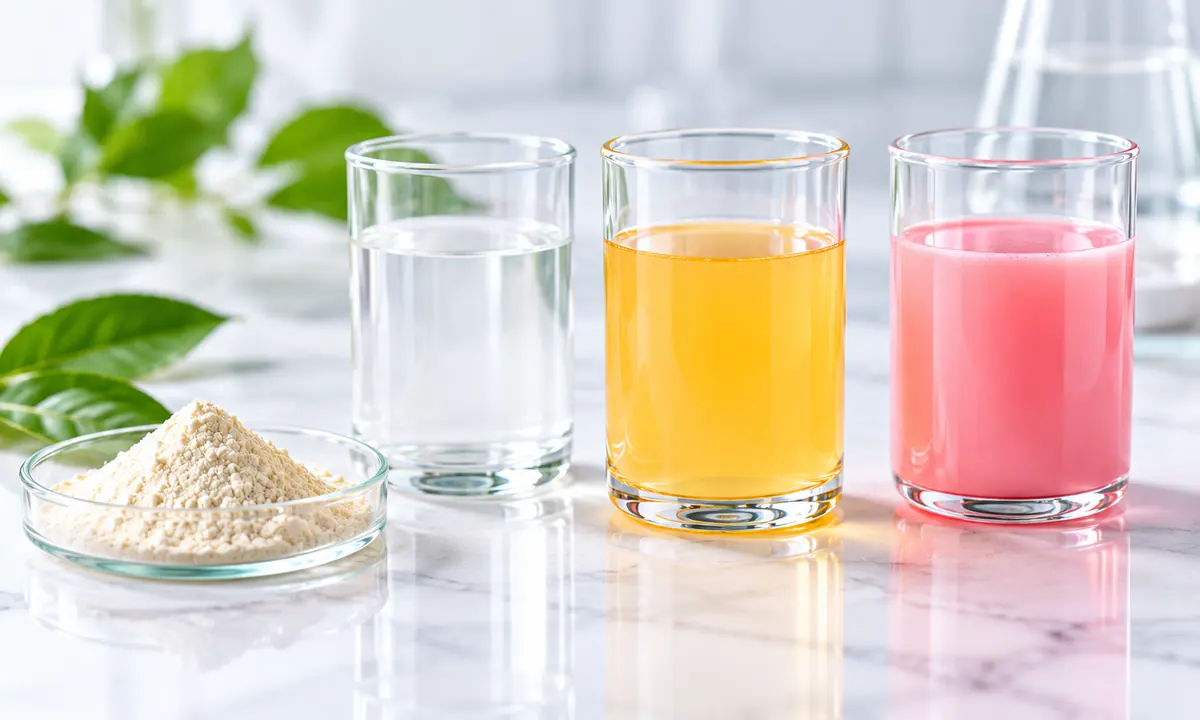
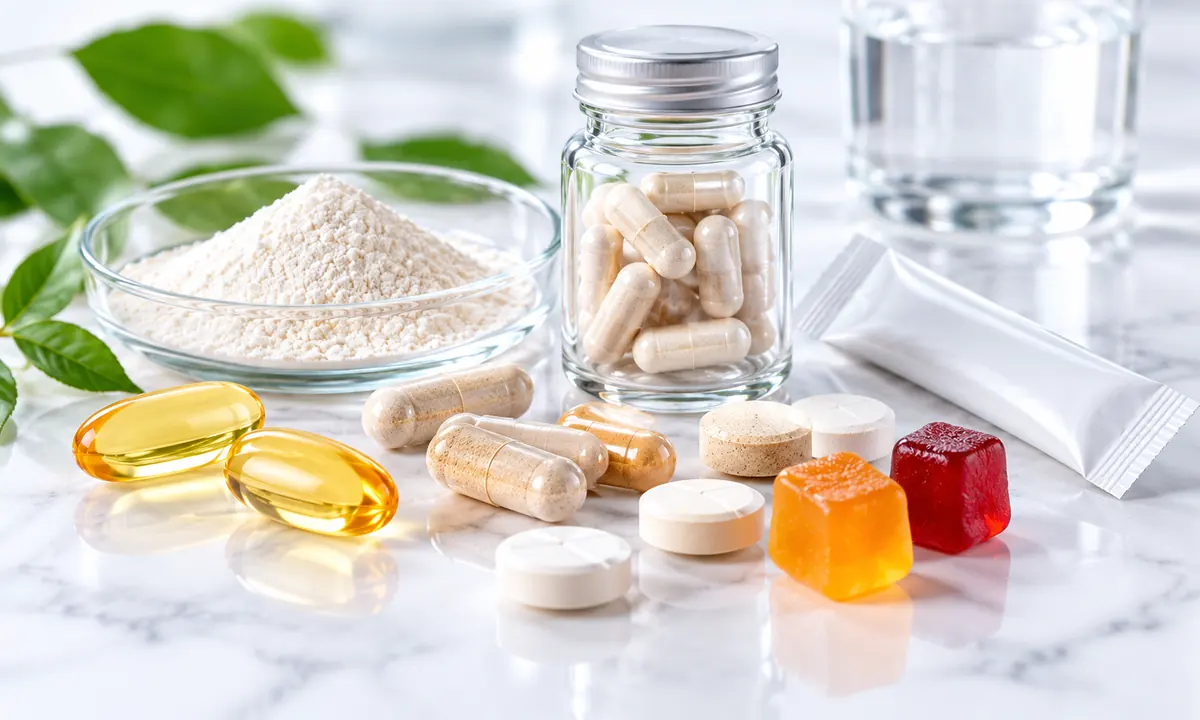
Explore grade selection for beverages, solid capsules, gummies and emulsions, including wettability, viscosity and heat stability.
FORMULATION SEARCH INTENT
Cold Dispersion · Viscosity · ICH Stress Chamber · Matrix Syneresis
Quality & Stability Resources
Understand batch release criteria, critical quality attributes, ICH Q3A/B impurity controls, and real-time kinetic degradation models.
QA SEARCH INTENT
ICH Impurities · Arrhenius Shelf-Life · Statistical Cpk · Monograph Compliance
Sourcing & Compliance Guides
Review supplier qualification checklists, regulatory disclosures, customs HS-code classifications and wholesale quotation frameworks.
BUYER SEARCH INTENT
Site Audit · COA · MOQ · Incoterms 2020 · Tariff Codes
EDITORIAL LIBRARY / SELECTED TECHNICAL ARTICLES
Featured Analytical & Formulation Guides
Deep-dive into molecular characterization, functional fiber stability, stereochemical CoQ10 processing, and comparative compendial monographs (USP vs. Ph. Eur.).
LONGEVITY / MOLECULAR IDENTITY
Urolithin A & Spermidine: Analytical Qualification Standards
Technical reading on high-purity longevity ingredients, synthetic impurity discrimination, and reference standard verification.
READ UROLITHIN A & SPERMIDINE GUIDE ↗
FUNCTIONAL FIBER / TECHNICAL DOSSIER
Oat Beta-Glucan 70%: Viscosity & Stability Considerations
Evaluate concentration, shear-thinning viscosity, molecular weight (SEC-HPLC), and competitive ELISA allergen records.
READ OAT BETA-GLUCAN DOSSIER ↗
FORMULATION SCIENCE / COENZYME Q10
Ubiquinone vs. Ubiquinol: Formulation & Stability Factors
Explore redox chemistry, atmospheric oxidation risks, crystalline melting behavior, and bioavailability enhancement strategies.
READ COQ10 FORMULATION GUIDE ↗
QUALITY STANDARDS / COMPENDIAL REVIEW
USP vs. European Pharmacopoeia: CoQ10 Quality Standards
Understand chromatographic chromatographic system suitability, chromatographic related substances, and regional release acceptance criteria.
READ USP VS. EP COMPLIANCE GUIDE ↗
Technical articles provide professional guidance. Exact product specifications, referenced clinical trials, analytical claims and regional regulatory frameworks must be confirmed against current batch release files.
FAST-TRACK INGREDIENT INTELLIGENCE
Access Product-Specific Technical Dossiers
Review individual raw material profiles, compendial monographs, and lot release records before requesting commercial quotations:
PRE-INQUIRY / TECHNICAL & SOURCING FAQ
Frequently Asked Questions from R&D Scientists & Sourcing Heads
Before approving an active raw material manufacturer, formulation and procurement executives require answers to distinct technical and operational criteria. Expand the modules below for direct guidance:
TRACK 01 / R&D + QUALITY ASSURANCE
Analytical, Characterization & Formulation Questions
What documents should an ingredient technical dossier include?
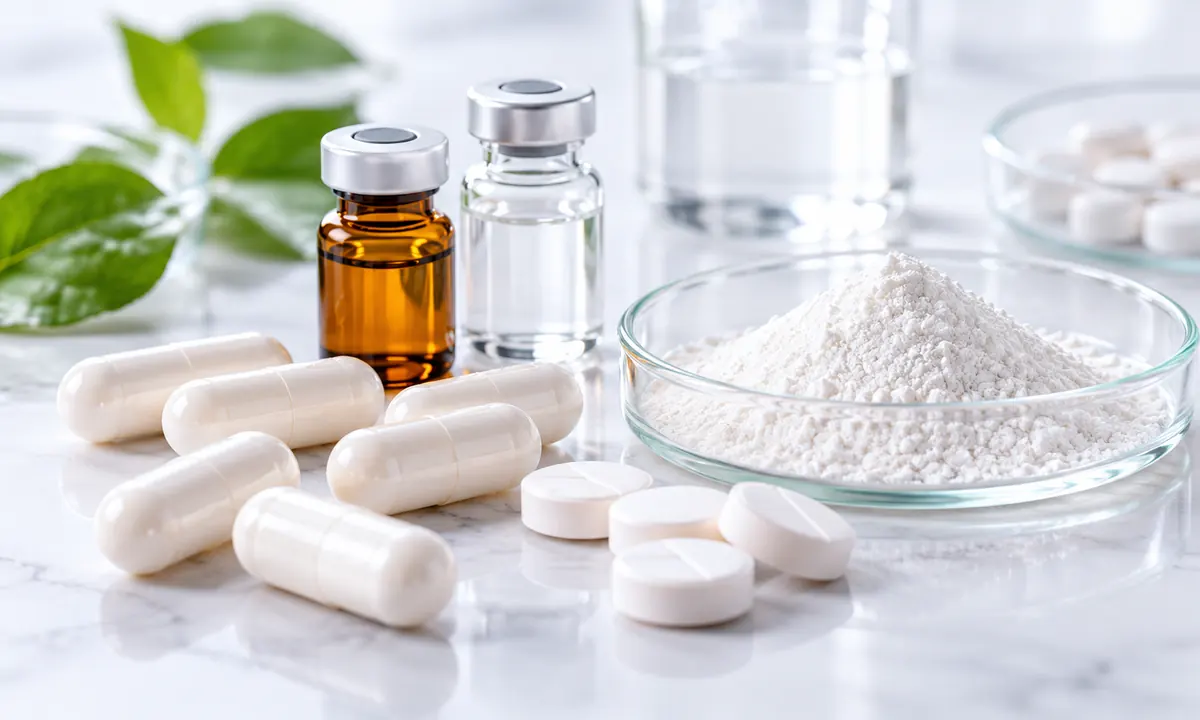
A complete qualification dossier encompasses: (1) Approved Product Specification, (2) Lot-specific signed COA, (3) Technical Data Sheet (TDS) and SDS, (4) Original HPLC/UPLC chromatograms with peak integration data, (5) Structural identity proof (HRMS/NMR), (6) Particle size laser diffraction distribution ($D_{10}/D_{50}/D_{90}$), (7) Residual solvent headspace GC-MS (USP <467>), and (8) Real-time/accelerated ICH stability data.
How do HPLC, LC-MS and ¹H NMR differ in identity verification?
HPLC verifies retention time against a certified reference standard and calculates quantitative purity. LC-MS (particularly Q-TOF accurate mass) provides exact mass-to-charge ($m/z$) ratios confirming molecular formula. ¹H/¹³C NMR confirms exact atomic connectivity, splitting patterns, and functional group placement, ruling out positional synthetic isomers. Chiral HPLC is further required for enantiomer separation (e.g., S-Equol vs R-Equol).
Is Oat Beta-Glucan 70% completely soluble in cold water?
For the evaluated EXBIOL Oat Beta-Glucan 70% grade, complete cold-water clarity should not be assumed. The recommended laboratory preparation begins with uniform dispersion in room-temperature water to minimize clumping. The mixture initially appears cloudy.During subsequent heating, hydration and visual clarity improve. In our observed preparation, the dispersion became visibly transparent at approximately 80°C or above.The final appearance and viscosity depend on concentration, mixing conditions, temperature and the selected batch. This observation does not establish instant cold-water solubility for all grades.
Which tests help qualify particle size, stability and batch consistency?
Critical tests include: Laser Diffraction PSD (ISO 13320 reporting $D_{10}/D_{50}/D_{90}$ and span), Tapped Bulk Density (USP <616>), Carr's Compressibility Index for powder flowability, ICH Q1A accelerated degradation assay kinetics ($40^\circ\text{C}/75\%\text{RH}$), Loss on Drying (LOD), and Multi-lot statistical process capability ($C_{pk} \ge 1.33$).
TRACK 02 / B2B PROCUREMENT & SUPPLY CHAIN
Supplier Qualification, Logistics & Wholesale Ordering
What is the MOQ for bulk botanical extracts and high-purity actives?
Minimum order quantities are structured by product value and synthesis tier: Specialty ultra-high purity bioactives (e.g., Ergothioneine, S-Equol, Urolithin A) offer 1 kg or 5 kg developmental trial packaging. Standard standardized extracts are supplied in 25 kg tamper-evident pharmaceutical-grade fiber drums. Custom pilot development runs are supported under specific technical service agreements.
Can buyers request batch COAs, sample materials and analytical records?
Yes. Qualified commercial formulation clients can request representative lot samples (10g–100g) accompanied by corresponding actual-batch COAs. For advanced regulatory filings, blinded third-party ISO/IEC 17025 accredited laboratory test reports (heavy metals, residual solvents, pesticides, bioburden) are accessible under mutual non-disclosure agreements (CDA).
How are wholesale prices, lead times and Incoterms confirmed?
Formal proforma quotations are issued based on annual volume commitments, packaging specs, and destination country. We support international commercial shipping terms under Incoterms 2020 including EXW, FOB Shanghai/Tianjin, CIF major airports/seaports, and air-express DAP/DDP delivery directly to client manufacturing cleanrooms.
How should buyers verify GMP, ISO and market compliance?
Buyers should audit the certificate registration number, certified scope matching the exact botanical product, issuing accreditation body (e.g., CNAS, UKAS), and physical manufacturing facility address. Note that U.S. FDA facility registration is a legal administrative prerequisite and does not equal agency approval. Valid third-party cGMP audit reports (21 CFR 111/117) are provided for vendor qualification files.
EXBIOL STRATEGIC DIRECTIVES / TECHNICAL SOURCING
A Better Sourcing Decision Starts With Clear Technical Specifications
01 / SPECIFICATION
Define target active marker assays, impurity tolerances, and physical powder flow parameters prior to issuing commercial RFQs.
02 / EVIDENCE
Insist on actual-batch signed COAs backed by validated chromatographic raw data, exact mass spectra, and third-party contaminant tests.
03 / DISPOSITION
Qualify physical batches under real pilot depositor or encapsulation conditions to guarantee full industrial scale-up consistency.
EXBIOL / TECHNICAL QUALIFICATION SUPPORT
Need Formulation Answers for Your Next Active Project?
Share your compound name, target delivery format, required assay monograph, and estimated trial or commercial volume. Our technical regulatory team will provide batch release documentation, stability summaries, and wholesale terms.
Regulatory & Technical Disclosure: Technical intelligence and educational articles provided in the EXBIOL Knowledge Hub are designed for industrial B2B formulation planning and scientific vendor qualification. Monograph limits, testing protocols (HPLC, HRMS, NMR, Laser Diffraction), and commercial supply commitments are formally governed by project-specific Technical Supply Agreements and authorized Certificate of Analysis (COA) documents.