
High-Purity Bioactive & Botanical Ingredients Manufacturer
for Nutraceutical, Pharmaceutical & Cosmetic Formulations
EXBIOL® is a specialized manufacturer and supplier of analytically verified bioactive ingredients, high-purity molecules and standardized botanical extracts. We support global R&D and sourcing teams with HPLC, LC-MS and 1H NMR identity evidence, impurity control, formulation stability data and batch-specific technical dossiers—from laboratory evaluation to validated commercial supply.
1H NMR Verification
Manufacturing Expertise
Commercial Batch
Technical Documentation
COMMERCIAL SOURCING · TECHNICAL QUALIFICATION
Bioactive & Botanical Ingredient Supply, From Specification to Commercial Batch
EXBIOL® is a bioactive ingredient manufacturer and standardized botanical extract supplier supporting commercial procurement and formulation development. Request available grades, MOQ, bulk pricing and dispatch lead times—or review ingredient identity, impurity specifications and application data with our team.
Need Pricing, MOQ & Availability?
For procurement teams, distributors and manufacturers sourcing an ingredient for an upcoming production run. Confirm the specification and supply conditions before placing your order.
- Available grades & packaging Match the required assay, form and pack size.
- MOQ & quantity-based quotation Request sample, pilot or commercial quantities.
- Stock status & dispatch lead time Confirm availability for the selected grade and quantity.
- Shipping terms & destination Review freight options and the scope of the quotation.
Include in your request: ingredient, grade, quantity and destination country.
Request Price & Availability →MOQ, stock and lead time are confirmed by product and order.
Need Batch Evidence & Formulation Support?
For formulators, R&D scientists and quality teams evaluating a new ingredient or qualifying an alternative supplier. Define the evidence needed before progressing to scale-up.
- Identity & assay verification Review HPLC, LC-MS or ¹H NMR evidence where applicable.
- Batch consistency & impurity specifications Discuss marker profiles, residual solvents and contaminants.
- Formulation performance & stability Assess dispersibility, viscosity, particle size and processing fit.
- Supplier qualification documents Request COA, TDS, SDS and applicable supporting records.
Include in your request: target specification, application and qualification requirements.
Request Technical Review →Analytical methods and documentation vary by ingredient and grade.
Start with your sourcing requirement—or explore the six application platforms below.
FORMULATION SOLUTION PLATFORMS
Bioactive Ingredient Solutions for Nutraceutical, Clinical Nutrition, Functional Food & Cosmetic Formulations
EXBIOL® supports R&D, quality and sourcing teams with high-purity bioactive ingredients, standardized botanical extracts and application-ready functional ingredients. Select a platform to compare grades, resolve formulation risks and request batch-specific technical documentation from an experienced bioactive ingredient manufacturer and supplier.

01
MOLECULAR IDENTITYLONGEVITY // COGNITIVE ACTIVES
Longevity & Cognitive Active Ingredients
High-value molecules for healthy-aging, mitochondrial and nootropic formulations, supported by product-appropriate identity testing, impurity review and batch qualification.
Urolithin A · Ergothioneine · Spermidine · Piceatannol
- Purity versus molecular identity
- Isomer, residual-solvent and stability risk

02
GRADE SELECTIONMETABOLIC // CLINICAL NUTRITION
Metabolic Health & Clinical Nutrition Ingredients
Functional fibers and metabolic actives for clinical nutrition, dietary-fiber enrichment, functional beverages and specialized food applications.
Oat Beta-Glucan 30–70% · Soluble Oat Fiber · Metabolic Actives
- Gluten status, molecular weight and viscosity
- Cold-water dispersion and processing stability

03
DERMAL COMPATIBILITYNUTRICOSMETIC // DERMAL ACTIVES
Nutricosmetic & Cosmetic Active Ingredients
Purity-controlled botanical and molecular actives for skin-brightening, antioxidant, healthy-aging and barrier-support formulations.
Bakuchiol · S-Equol · Anthocyanins · Astaxanthin
- Psoralen, color and oxidation control
- Oil, powder and emulsion compatibility
04
DOSE-TO-FORMULA FITDIGESTIVE // MICROBIOME
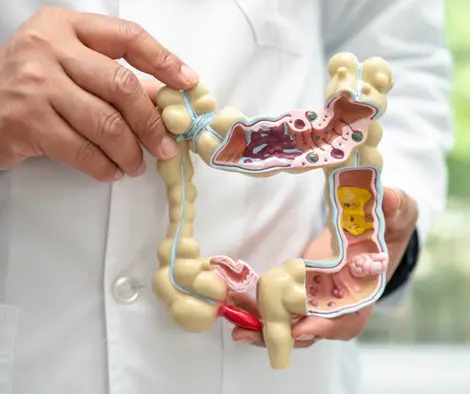
Digestive Wellness & Microbiome Ingredients
Functional fibers, prebiotic materials and specialized actives for gut-health, microbiome and metabolic formulation programs.
Prebiotic Fibers · Fungal Chitosan · Mushroom Polysaccharides
- Effective dose versus serving-size constraints
- Dispersibility, texture and microbiological control

05
MARKER VERIFICATIONIMMUNE // LIVER SUPPORT
Immune Resilience & Liver Support Ingredients
Standardized mushroom and botanical ingredients selected for marker consistency, contaminant control and formulation-specific documentation.
Mushroom Extracts · Silymarin · Adaptogenic Botanicals
- Marker assay and botanical authenticity
- Pesticide, heavy-metal and microbial specifications

06
APPLICATION SUPPORTLIFESTYLE // STRESS SUPPORT
Lifestyle Wellness & Stress Support Ingredients
Standardized and rare botanical actives for sleep, stress, hormonal wellness, oral-care and differentiated lifestyle products.
Valerian · Adaptogens · Hormonal Wellness · Rare Botanicals
- Low-temperature processing and active retention
- Taste, odor, dispersion and application fit
ANALYTICAL EVIDENCE · COMMERCIAL CONFIDENCE
Bioactive Ingredient Supplier Qualification: Identity, Batch Consistency & Formulation Fit
Selecting a botanical extract or high-purity active requires more than an assay number. EXBIOL® helps sourcing, R&D and quality teams connect ingredient specifications, available batch evidence and application requirements before sample evaluation or commercial procurement.
YOUR QUALIFICATION CHECKLIST
What Your Team Needs to Verify
Define the risk before selecting a grade or supplier.
PRODUCT-SPECIFIC DOCUMENTATION
Evidence to Request from EXBIOL
Review the available records for your selected material.
Does the Assay Confirm Ingredient Identity?
Confirm what the reported percentage measures, which method was used and how the target compound or botanical source was identified.
Identity & Assay Documentation
Request the specification, batch-specific COA and available chromatographic evidence. HPLC, LC-MS, GC-MS or 1H NMR methods are selected according to the ingredient and qualification objective.
Will the Next Batch Meet the Same Specification?
Compare agreed acceptance limits and relevant batch results. A matching headline assay alone may not answer questions about marker profiles or physical properties.
Batch Consistency & Traceability Review
Discuss marker compounds, available fingerprint comparisons, lot identification and relevant physical specifications. Establish the parameters that matter to your incoming quality-control process.
Are Your Critical Impurities Covered?
Identify the residual solvents, related substances, contaminants or allergens relevant to your application. Check the method and reporting limit as well as the result.
Impurity & Contaminant Specifications
Request applicable residual-solvent, heavy-metal, pesticide and microbiological records. Product-specific concerns, such as psoralens or gluten, can be included in the qualification discussion.
Will the Ingredient Fit Your Formulation?
Define the dosage form, use level, pH, processing temperature and storage conditions. Distinguish water dispersibility from complete solubility.
Application Data & Evaluation Planning
Review available particle-size, viscosity, dispersibility and stability information with its test conditions. Discuss sample evaluation for powder, beverage, oil, emulsion or gummy systems.
Analytical methods, documentation and application data vary by ingredient, grade and batch. Availability is confirmed during technical review.
FROM REQUIREMENT TO REVIEW
Product-Specific Qualification Priorities
Start with the parameters that influence your material selection.
Oat Beta-Glucan
Beta-glucan content, total dietary fiber, molecular weight, viscosity, dispersion conditions and batch-specific gluten testing where required.
Functional beverages · Specialized nutritionAnthocyanin Extracts
Botanical source, HPLC assay basis, fingerprint profile, carrier composition and specification differences between blackcurrant and bilberry extracts.
Grade comparison · Supplier replacementUrolithin A
Molecular identity, HPLC assay, impurity specifications and, for applicable grades, particle-size information to support formulation evaluation.
Identity review · Pilot-scale qualificationBuild Your Ingredient Qualification File
Request specifications, COA, TDS, SDS and applicable analytical records. Include the selected grade and any required testing methods so our team can identify available evidence and additional information needs.
Quality Documentation for Ingredient Sourcing
Request applicable manufacturing certificates and product documentation to support supplier approval, ingredient selection and purchasing decisions.
-
GMP
Manufacturing documentation
Request scope ↗ -
ISO 9001
Quality management system
Request certificate ↗ -
HACCP
Food safety documentation
Request documents ↗ -
Halal
Ingredient-specific coverage
Check coverage ↗ -
Kosher
Ingredient-specific coverage
Check coverage ↗ -
COA · TDS · SDS
Product and batch documents
Request documents ↗
Tell us your ingredient, grade and destination market.
Certification scope and document availability vary by manufacturing site, ingredient and grade. Request the applicable documents for your project.
High-Purity Bioactive Ingredients & Standardized Botanical Extracts
EXBIOL® supplies high-purity bioactive ingredients, cosmetic actives and standardized botanical extracts for nutraceutical, personal care and functional food development. Explore ingredient categories by active compound, assay and application, then request available grades, technical specifications and bulk pricing for your project.
Have a target specification? Share the ingredient name, required assay, application and quantity to discuss grade selection, sample options and commercial supply.
Request Specifications & Pricing →
High-Purity Bioactive Ingredients
Compare bioactive compounds by identity, assay, impurity specification and available grade.
Identity & assay Explore ingredients →
Cosmetic Active Ingredients
Explore cosmetic actives for skincare formulations, with grade selection based on purity, color and solubility.
Cosmetic specifications Explore ingredients →
Standardized Botanical Extracts
Select herbal extracts by botanical species, plant part, marker compound and analytical method.
Marker compound assays Explore ingredients →
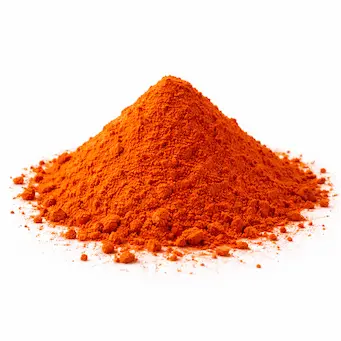
Carotenoid Ingredients
Compare carotenoid ingredients by active content, carrier and powder or oil format for your application.
Powder & oil formats Explore ingredients →
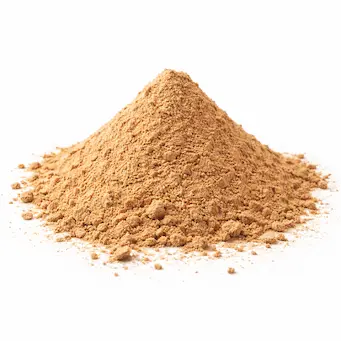
Functional Mushroom Extracts
Review mushroom species, source material, extraction method and beta-glucan or specific marker content.
Source & composition Explore ingredients →
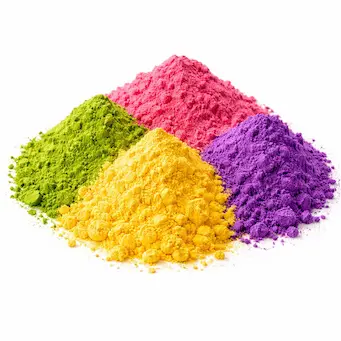
Natural Sweeteners & Colors
Compare sweetener and color ingredients for taste, color strength and processing compatibility.
Taste & color selection Explore ingredients →
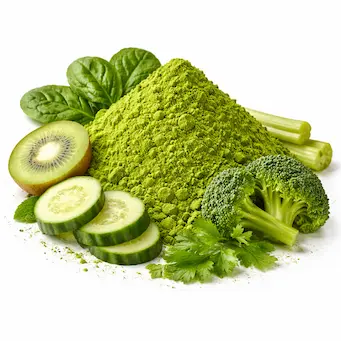
Fruit & Vegetable Powders
Source botanical powders by raw material, carrier composition, particle size and application requirements.
Composition & format Explore ingredients →
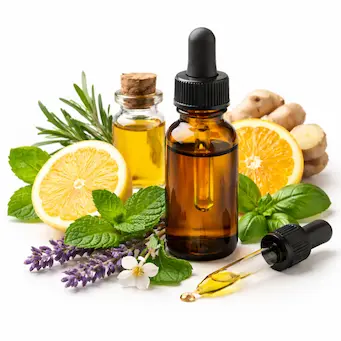
Essential Oils
Select essential oils by botanical source, extraction process, aroma profile and intended formulation.
Botanical source & profile Explore ingredients →
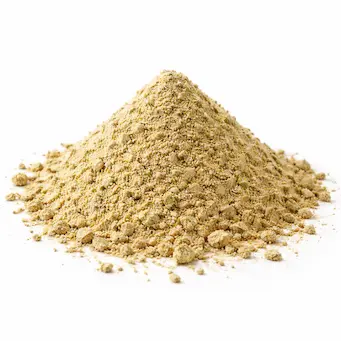
Organic Ingredients
Explore organic ingredient options and request certification coverage for the selected material and market.
Check certificate scope Explore ingredients →
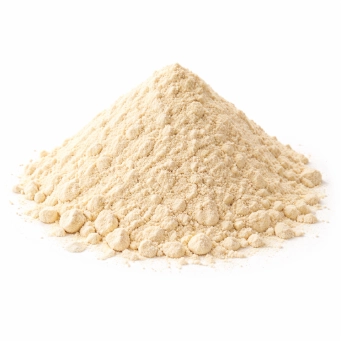
Natural Enzymes
Compare enzyme ingredients by activity units, assay conditions and processing requirements.
Activity & assay conditions Explore ingredients →Need a specific ingredient or grade?
Send your target specification, application and quantity to request sample options and a bulk quotation.
Need a Verified Ingredient for Your Formulation?
Submit your target ingredient, specification, application and required quantity. Our team will review the appropriate grade, available analytical documents and commercial supply options.
For faster review, include the ingredient name, target specification, intended application, quantity and destination country.
Botanical Extract Manufacturing &
High-Purity Bioactive Ingredients
Connect your ingredient specification with manufacturing requirements, analytical documentation and commercial supply.
EXBIOL® is the bioactive ingredient platform of Shaanxi Zhonghong Investment Technology Co., Ltd., based in Xi’an, China. We supply high-purity actives and standardized botanical extracts for nutraceutical, cosmetic and functional food development.
About EXBIOL ↗Extraction, Purification & Standardization
Define botanical species, plant part, extraction route and target assay. Discuss marker concentration, carrier composition and powder characteristics against your purchasing specification.
Analytical Review & Batch Documentation
Clarify identity, assay basis and relevant impurity limits. Request batch-specific COA, specifications and available HPLC or other analytical records appropriate to the selected ingredient.
Formulation Evaluation & Commercial Supply
Address dispersibility, particle size, viscosity or stability requirements before scale-up. Align the evaluation sample, agreed grade, packaging and supply conditions for your production plan.
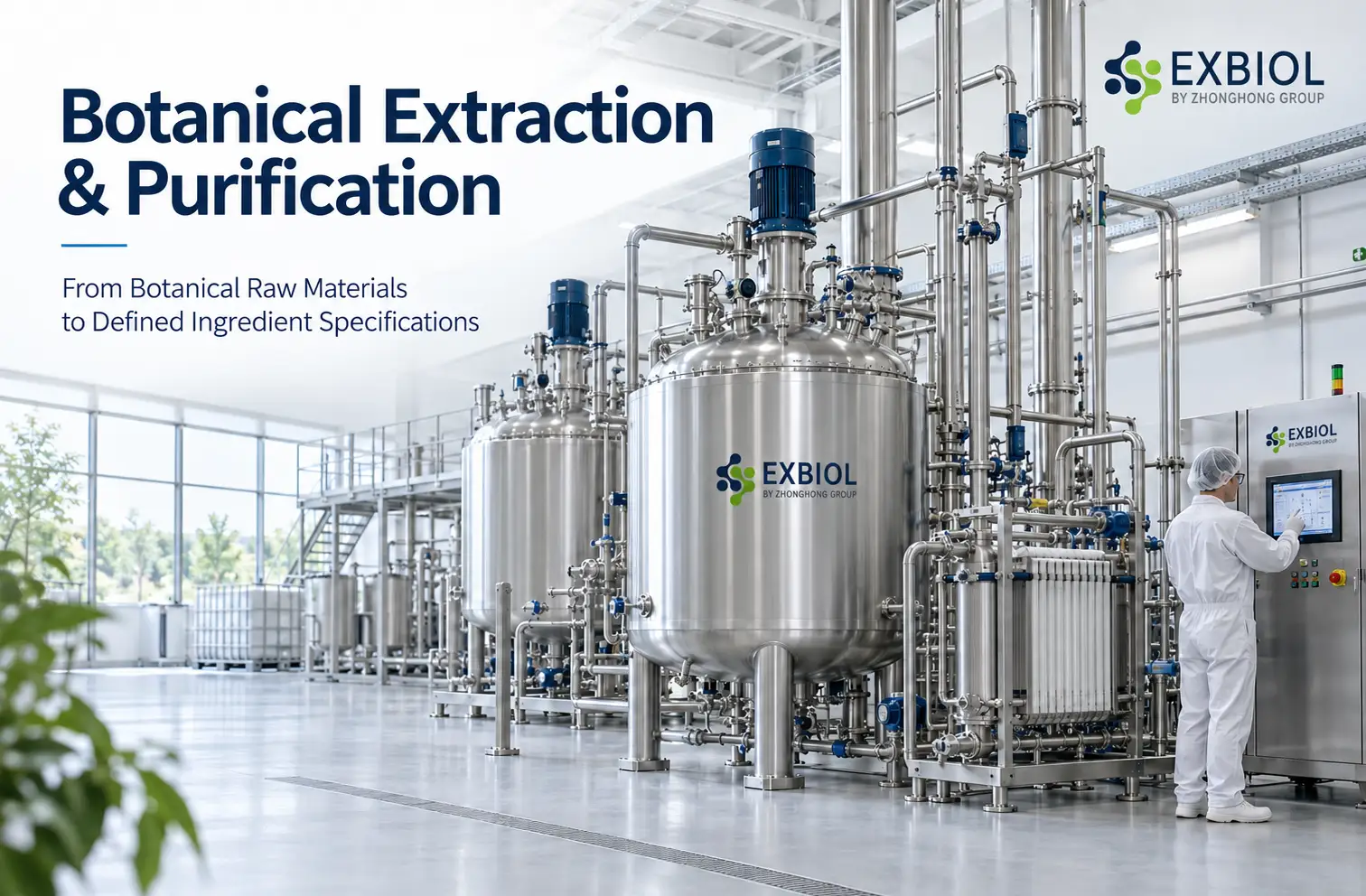
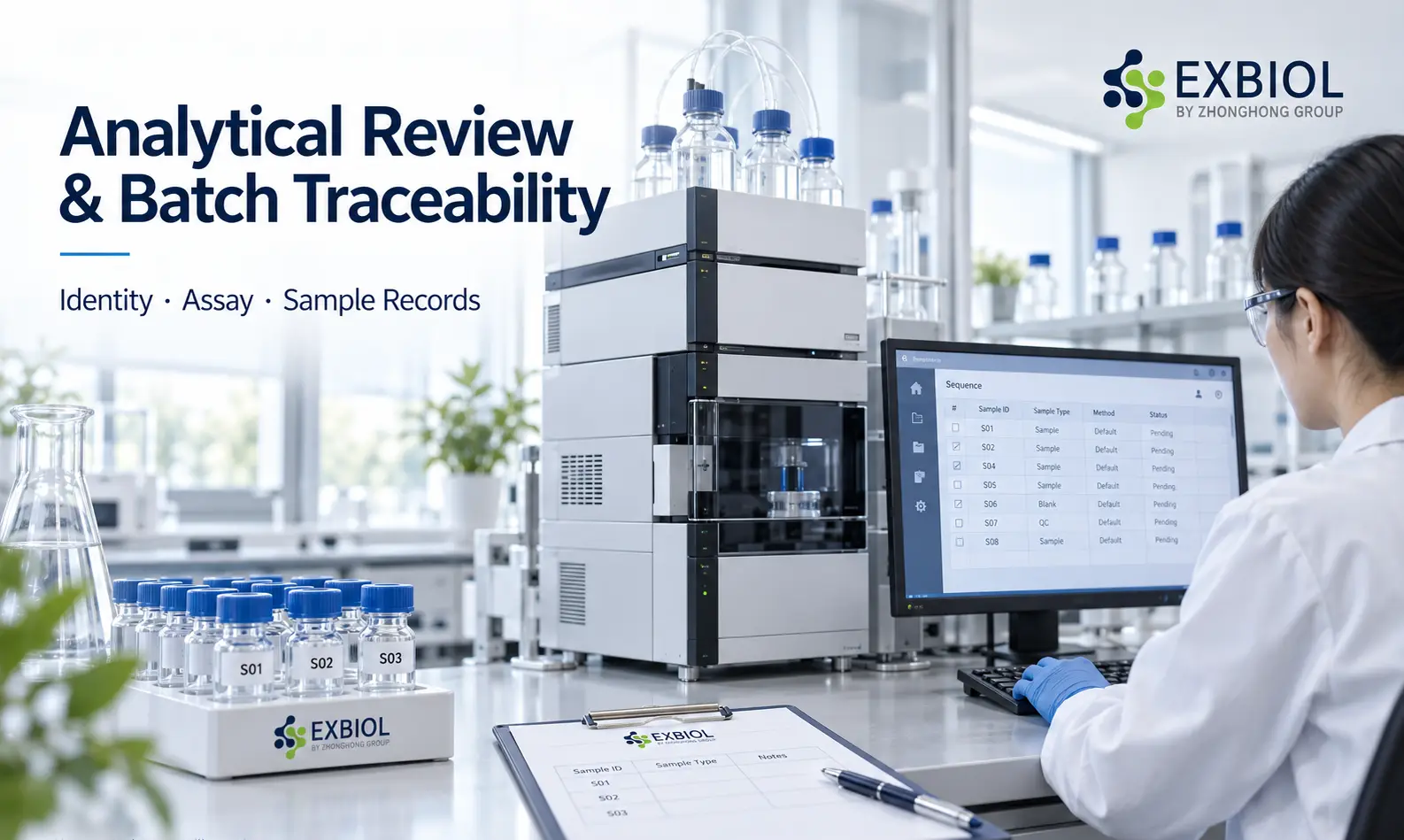
AI-generated process illustrations; not photographs of EXBIOL facilities.
From Your Target Grade
to the Next Procurement Step
Price, MOQ & Lead Time
Send the ingredient, grade, quantity and destination for a product-specific quotation.
Request Bulk Pricing →Specifications & Sample Review
Share your application, acceptance criteria and documentation requirements.
Discuss Technical Requirements →
Bulk Ingredient Sourcing:
From Sample to Commercial Supply
Source high-purity bioactive ingredients and standardized botanical extracts with a clear path through grade selection, sample evaluation and commercial ordering. Bring your purchasing requirements and formulation criteria into the same conversation.
Ingredient Grade & Specification
Start with the active content, botanical identity and intended application—not a product name alone.
- Target assay and reporting basis
- Extract ratio, carrier and physical form
- Application and destination market
Sample Evaluation & Analytical Review
Discuss sample availability and the documentation needed to assess identity, assay and formulation performance.
- Sample lot and corresponding COA
- Test method and acceptance criteria
- Solubility, color and stability requirements
Pilot Orders & Commercial Batch Planning
Align pilot and bulk-order requirements before scaling. Define the attributes that matter to your manufacturing process.
- Sample-to-order specification alignment
- Particle size, moisture and packaging needs
- Lot acceptance and change-notification needs
Bulk Pricing, MOQ & Delivery Planning
Request a quotation for your selected grade, quantity and destination, with availability and supply terms confirmed for the order.
- Price, minimum order and pack size
- Stock status or production lead time
- Shipping terms and estimated transit time
Have a specification or sourcing brief?
Send the ingredient name, target grade, quantity and destination. For R&D projects, include your application and critical acceptance criteria.
Sample, testing and documentation availability are confirmed for the selected ingredient and grade.
Need an Alternative Ingredient Supplier?
Start with the Specification That Matters.
Whether you are replacing an existing raw material or developing a new formula, compare more than the ingredient name. Discuss active content, analytical methods and formulation requirements with EXBIOL® before selecting a grade.
Active Content & Assay Method Matching
Does your current ingredient miss the target assay?
Before comparing two supplier specifications, establish what is measured, how it is reported and whether the results use a comparable analytical basis.
- Target compound or standardized marker content
- Test method, reference standard and reporting units
- Dry-basis versus as-is results and carrier content
Solubility, Dispersibility & Stability Requirements
Does the ingredient behave differently in your formula?
A high assay alone does not define formulation fit. Share the conditions that affect processing, appearance and performance in your finished product.
- Application, inclusion level and processing temperature
- Target pH, viscosity, clarity and sensory requirements
- Particle size, carrier system and storage conditions
Alternative Grade & Supplier Qualification
Need a second source without overlooking critical differences?
Define which specifications must remain unchanged and which can be evaluated. Include both technical acceptance criteria and commercial purchasing requirements.
- Identity, origin and required quality documentation
- Acceptable specification ranges and sample evaluation needs
- Order quantity, packaging, target timing and destination
Tell Us What Needs to Change.
Send the ingredient name, target specification, application and required quantity. If available, include a redacted specification sheet and the issue you want to resolve.
Alternative grades require evaluation in your formulation; matching an assay value alone does not establish equivalence.
Technical Dossier: Analytical Evaluation of Oat Beta-Glucan 70%
Optimizing Formulation Stability, Viscosity Control, and Microbial Integrity in Functional Foods 01. Executive Summary: Beyond the 70% Assay For R&D scientists at global dairy and
Coenzyme Q10 Technical Dossier: Analytical Evaluation & USP Compliance
Redefining Standard via Analytical Integrity and Pharmaceutical-Grade Verification 01. Executive Summary: Moving Beyond “Compliance” In the industrial procurement of Coenzyme Q10, “99% Purity” has become
USP vs. EP Standards for Coenzyme Q10 | Global Compliance Guide | Exbiol
USP vs. EP Standards: A Technical Guide to Coenzyme Q10 (Ubidecarenone) Global Compliance In the highly regulated landscape of 2026, R&D managers and procurement leads
Ubiquinone vs. Ubiquinol: The Formulator’s Guide to Stability, Bioavailability, and Cost-Efficiency
Ubiquinone vs. Ubiquinol: The Strategic Guide for Nutraceutical Formulators and Bulk Buyers In the high-stakes arena of premium nutraceuticals, the choice between Ubiquinone (the oxidized form
Ingredient Sample Preparation, Bulk Packaging & Global Delivery
Plan the practical details of your ingredient order—from sample quantities and packaging to batch identification and international shipping. Confirm the requirements for your selected grade before dispatch.
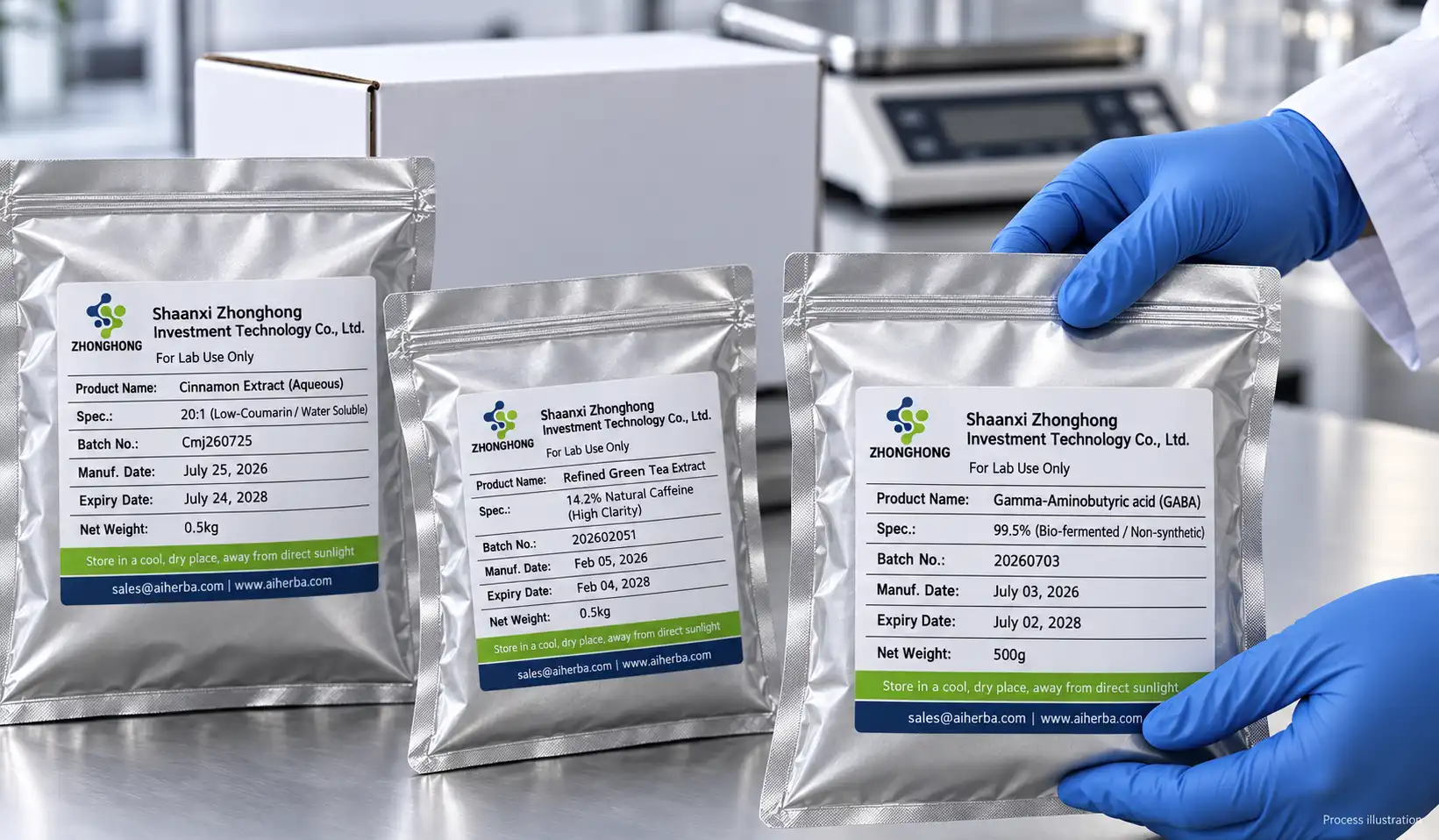
01 / SAMPLE
R&D Sample Preparation
Request a sample quantity suited to your formulation trial, with the grade and identification details agreed before preparation.
- Sample quantity and packaging requirements
- Ingredient grade and sample lot identification
- Available COA and evaluation documents
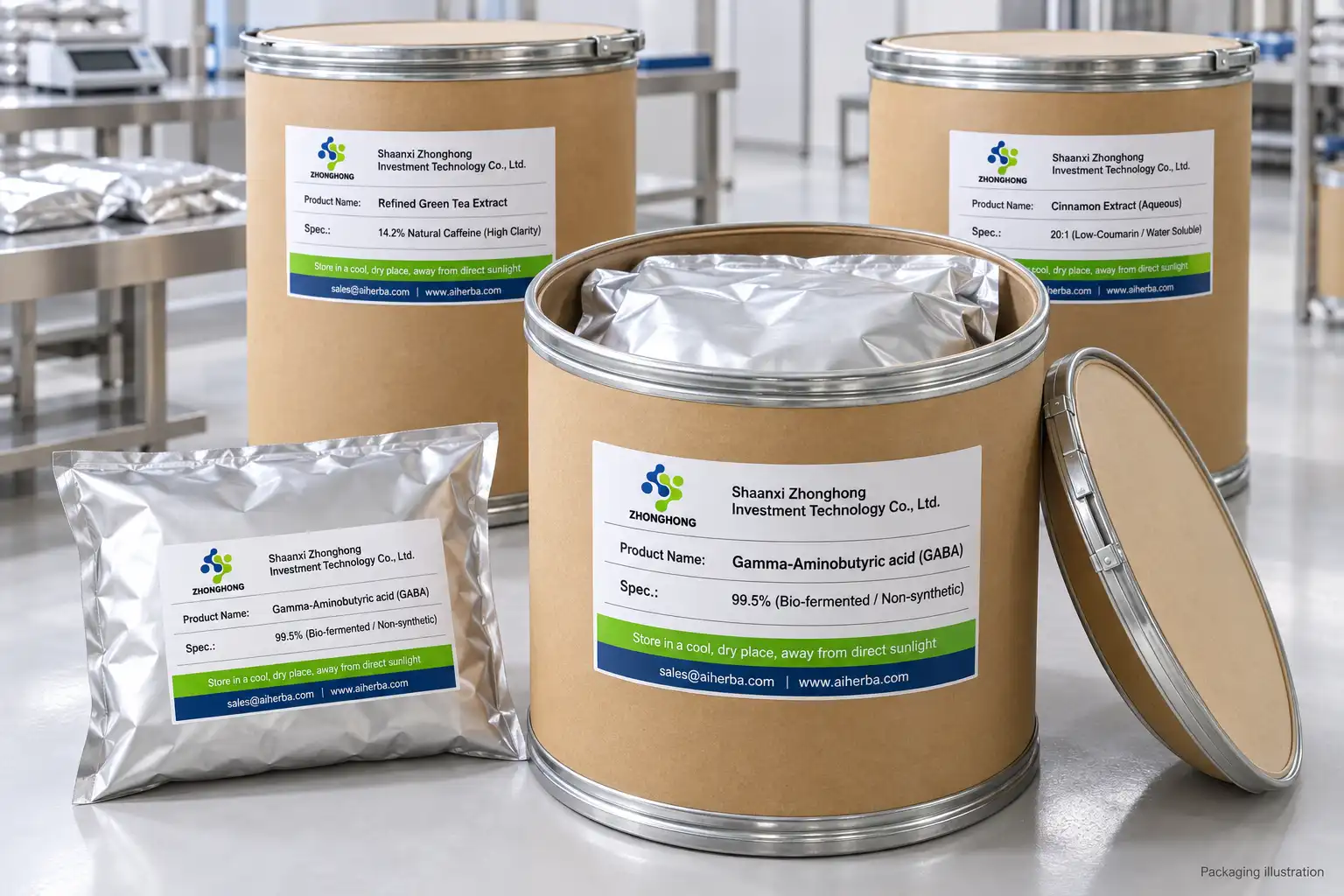
02 / PACKAGING
Bulk Ingredient Packaging
Match pack size and protective packaging to the ingredient, order quantity and handling conditions at your facility.
- Available drum, bag and inner-pack formats
- Sealing, labeling and handling requirements
- Product-specific storage instructions
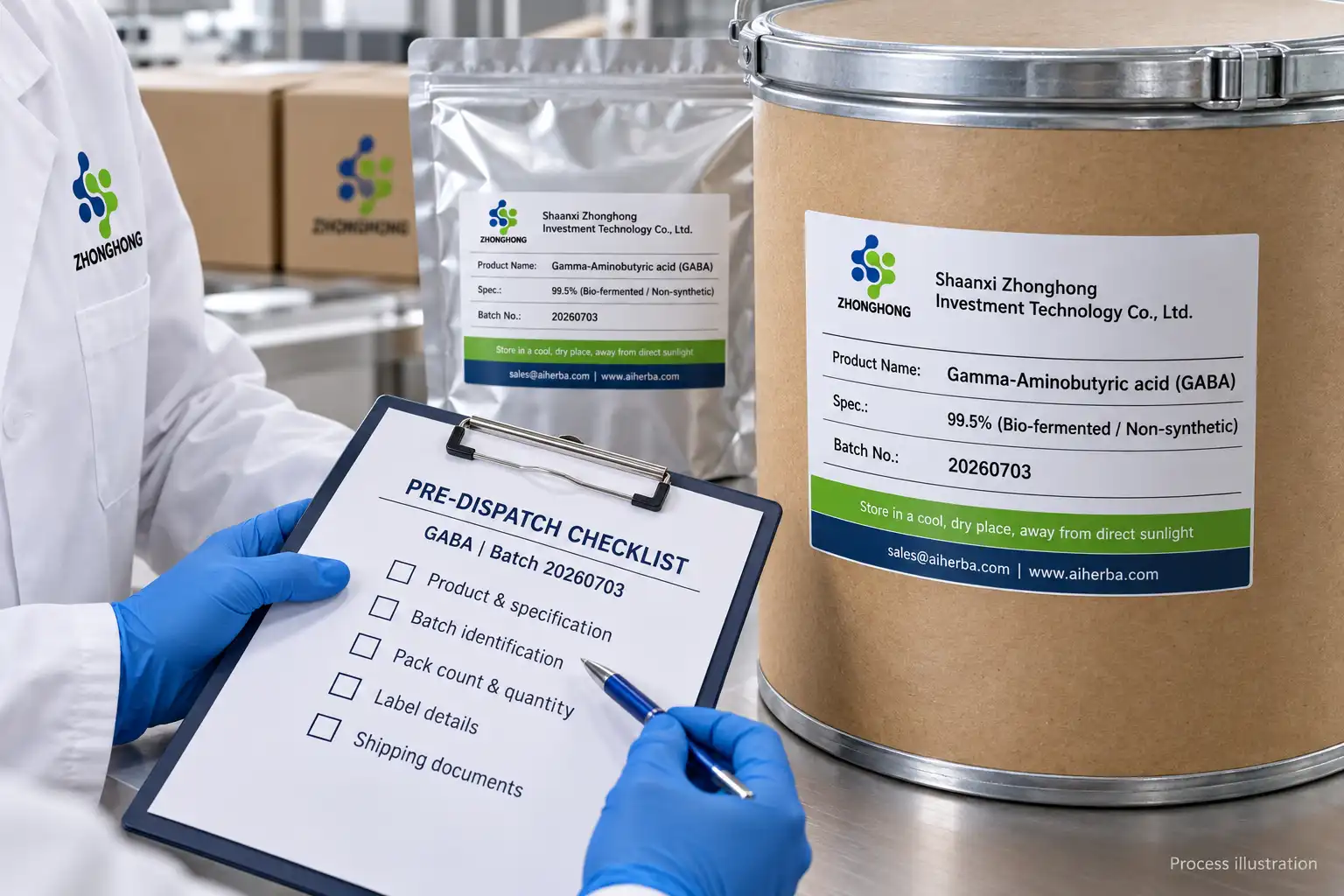
03 / ORDER REVIEW
Order & Dispatch Verification
Define the checks needed before dispatch so product identification, quantities and shipping information align with the agreed order.
- Product name, grade and batch references
- Pack count, labeling and order quantities
- Invoice, packing list and document requirements
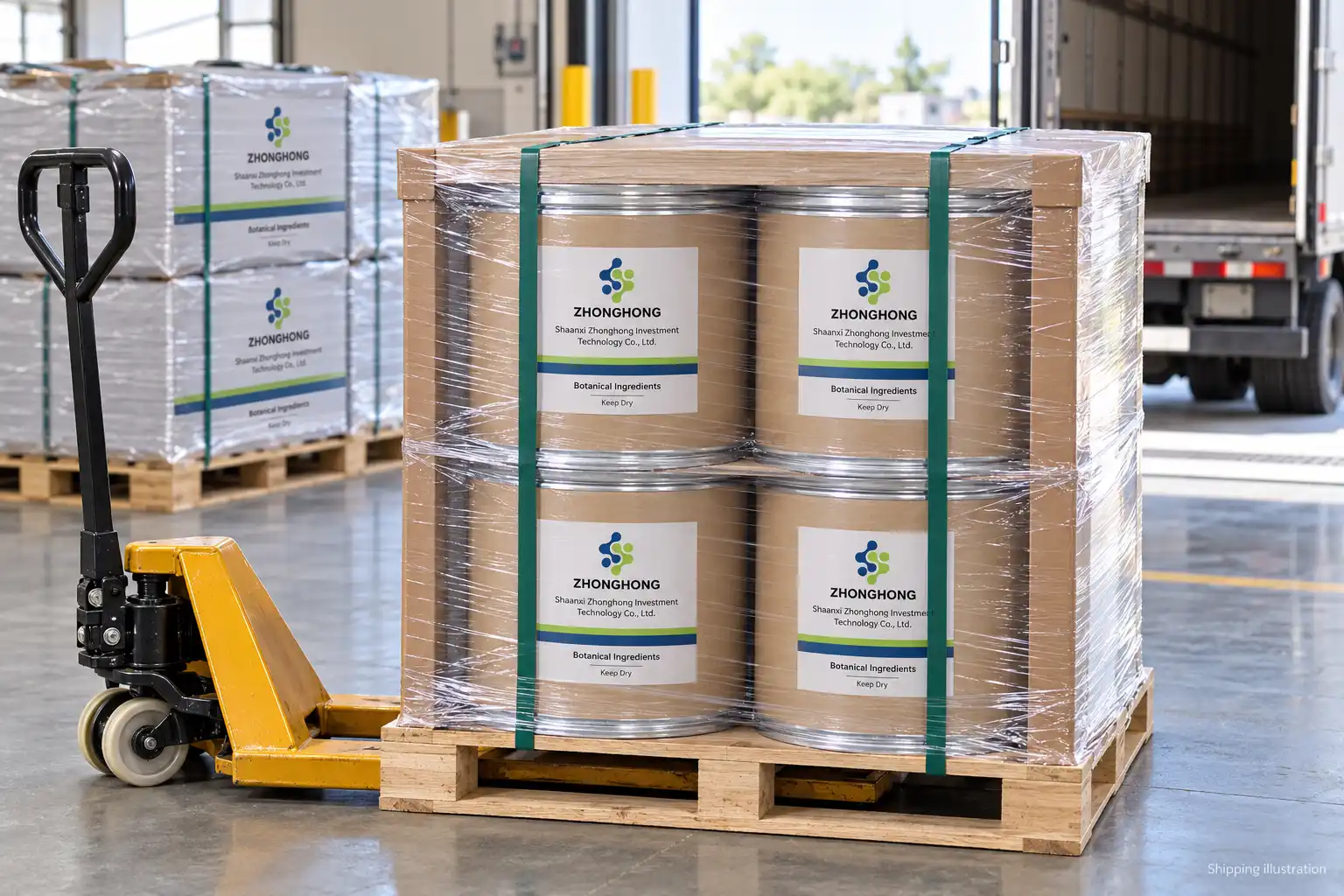
04 / DELIVERY
International Shipping Options
Discuss express, air or sea freight according to shipment size, destination and your required delivery schedule.
- Dispatch timing and estimated transit time
- Destination-specific freight options
- Delivery terms and included shipping costs
Images illustrate sample preparation, packaging and delivery workflows.
Planning Your Next Ingredient Shipment?
Send the ingredient name, target grade, quantity and destination to discuss sample or commercial supply options.
Request Ingredient Pricing, Samples & Technical Documents
Tell us which ingredient you need and your target specification. Request bulk pricing, sample availability or technical documents for your evaluation.
Botanical Extract & Bioactive Ingredient Supply: Pricing, Quality & Formulation FAQs
Qualifying an ingredient supplier or preparing your next formulation trial? Find practical guidance on bulk quotations, R&D samples, batch-specific COAs, analytical methods and commercial supply.
01Bulk Pricing, MOQ & Ingredient Samples
How do I request a bulk ingredient price and availability check?
Send EXBIOL the ingredient name, target assay or grade, order quantity, application and delivery country. For botanical extracts, include the botanical species, plant part and marker compound where specified. These details allow the quotation to distinguish material price, packaging, testing requirements and shipping terms.
If you are replacing an existing supplier, attach your current specification so the comparison covers equivalent grades rather than price alone.
What is the minimum order quantity, and can I request an R&D sample?
MOQ and sample size depend on the ingredient, grade and available pack size. Tell us how much material your analytical or formulation trial requires. Request confirmation of sample availability, material cost, repacking charges and freight before arranging shipment.
For high-value bioactive ingredients, a small paid evaluation sample may be more appropriate than a standard bulk pack. Sample terms are confirmed for each request.
How are lead time, bulk packaging and international delivery confirmed?
Request a quotation that separates batch release, dispatch lead time and estimated transit time. Timing depends on stock status, additional testing, repacking and destination requirements. Packaging should match the material’s sensitivity to moisture, oxygen, light and temperature.
For a DDP or other delivered quotation, provide the full destination and ask for written confirmation of freight, customs responsibilities, duties and exclusions. Delivery terms and route availability are confirmed per shipment.
02Batch COAs, Analytical Methods & Supplier Qualification
Which documents should I request before approving an ingredient supplier?
Start with the product specification, batch-specific Certificate of Analysis (COA), Technical Data Sheet (TDS) and Safety Data Sheet (SDS), as applicable. Match the product name, grade and lot number across the material label and supporting records.
Depending on your application, also request relevant allergen, GMO, origin, manufacturing-process and certification information. Ask EXBIOL to confirm the available document package for your selected grade; specialist reports may require additional testing.
Can I request HPLC chromatograms, LC-MS or NMR identity data?
You can request analytical evidence for the ingredient under review. Method selection and data availability are product-specific: chromatography can support marker-compound profiling and assay, while complementary identity methods may be appropriate for isolated bioactive molecules.
Specify whether you need a representative technical report or data for the proposed supply lot. Confirm the method, reference standard and report scope rather than assuming every ingredient is tested by every instrument.
Is HPLC area purity the same as active ingredient content?
No. Chromatographic area percentage and quantitative assay are not automatically interchangeable. Compare results using the stated method, reference standard and reporting basis, including whether the value is reported as-is or on a dry basis.
For standardized extracts, also check the marker definition and carrier content. A similar headline percentage does not establish that two materials deliver the same active content in a formulation.
How should I assess batch consistency and contaminant testing?
Compare relevant batch results against an agreed specification, including identity, assay, moisture and application-critical physical properties. Where useful, request representative lot comparisons or an appropriate chromatographic fingerprint.
Define the required residual-solvent, heavy-metal, microbiological or pesticide testing scope for the ingredient and intended market. Review methods, reporting limits and actual results; a general quality statement does not replace a product-specific report.
Are certifications and market suitability the same for every grade?
No. Review each document against the manufacturing site, product scope and validity period. Request the certificates and declarations relevant to your selected ingredient, such as organic, Halal or Kosher documentation where applicable.
Share the destination market and intended use—food, dietary supplement, cosmetic or pharmaceutical development—so the appropriate documentation can be discussed. A certificate alone does not establish authorization for every application.
03Ingredient Solubility, Stability & Commercial Scale-Up
Should I choose the highest-purity ingredient or a formulated grade?
Choose the grade that meets your finished-product requirements. A high-purity isolate may suit precise dosing or a defined impurity specification. A standardized extract, dispersion or carrier-based grade may better suit handling and formulation needs.
Compare active content, carrier composition, particle size, processing behavior and cost per delivered amount of active ingredient. A higher assay alone does not establish better solubility or finished-product performance.
How do I evaluate solubility and stability in beverages, capsules or cosmetics?
Share your dosage, solvent system, pH, processing temperature and intended shelf life. For beverages, evaluate dispersion, clarity, sediment and flavor in the actual formula. For capsules and powders, consider moisture sensitivity and handling. For cosmetics, assess compatibility with the intended aqueous, oil or emulsion system.
Raw-material shelf-life information does not establish finished-product stability. Confirm performance in your own formulation and packaging under the intended storage conditions.
How can I reduce risk when moving from a sample to a commercial batch?
Record the approved sample’s grade, lot number, specification and evaluation criteria. Before ordering, confirm whether the commercial supply is the same lot or a different batch and review the corresponding COA.
For critical applications, agree on acceptance tests, retained samples, packaging and notification of relevant specification or process changes. Complete pilot-scale evaluation before committing to a larger production run.
Build a Product-Specific Supplier Review Package
01 · Material & Batch
Review the specification, lot COA, assay basis, origin and carrier composition where relevant.
02 · Method & Application
Define the analytical evidence, physical properties and formulation trials your team needs.
03 · Commercial Terms
Confirm MOQ, packaging, sample charges, dispatch schedule and delivery responsibilities.
Document availability, testing scope and supply terms are confirmed for the selected ingredient, grade and batch.